
⚖️Disclosure: Smart Living HQ is a participant in the Amazon Services LLC Associates Program, an affiliate advertising program. If you buy something through a link on this page we may earn a small commission, at no extra cost to you. It never changes which clock we recommend — we rank them on how well they do the sunrise, not on how many extras they list.
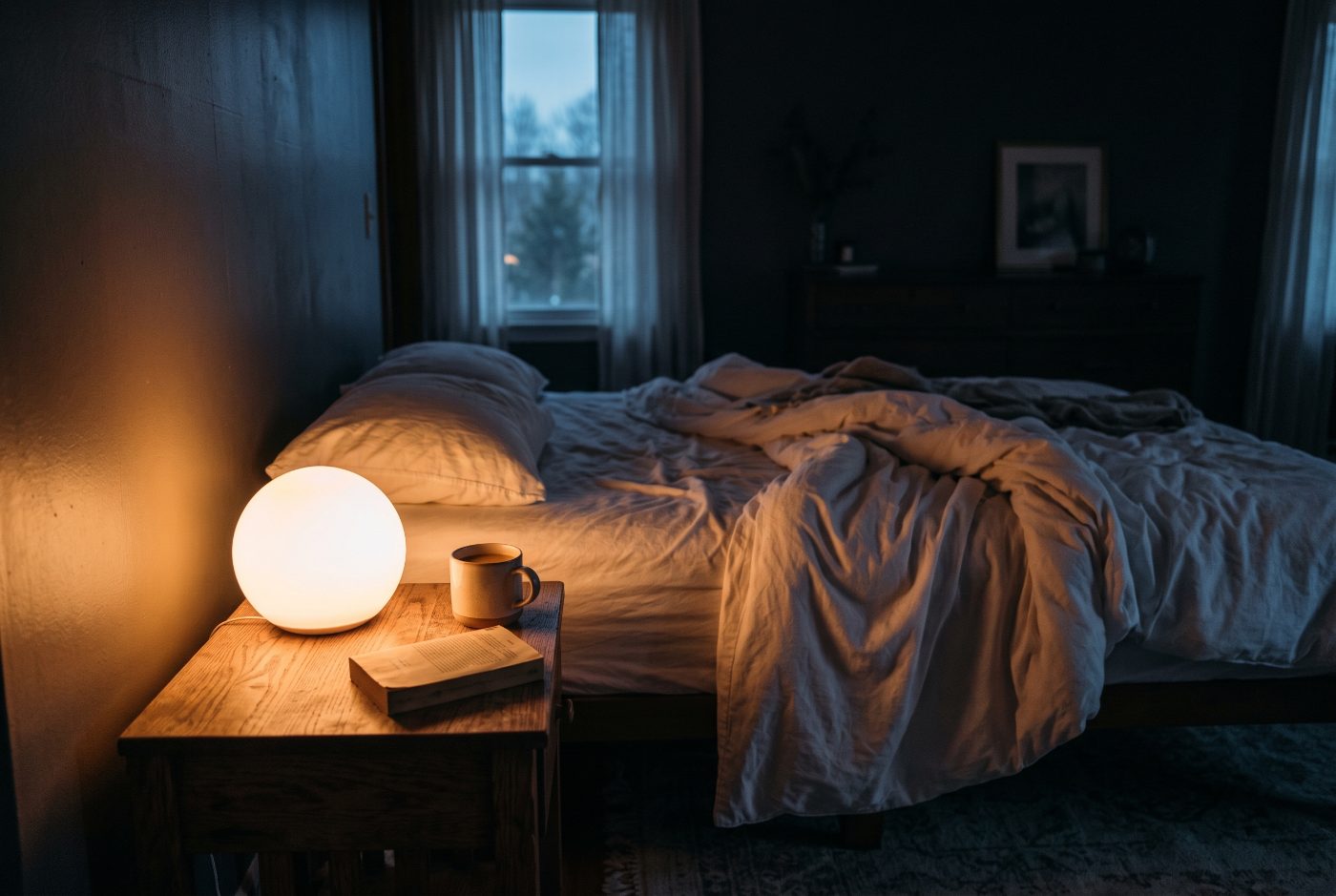
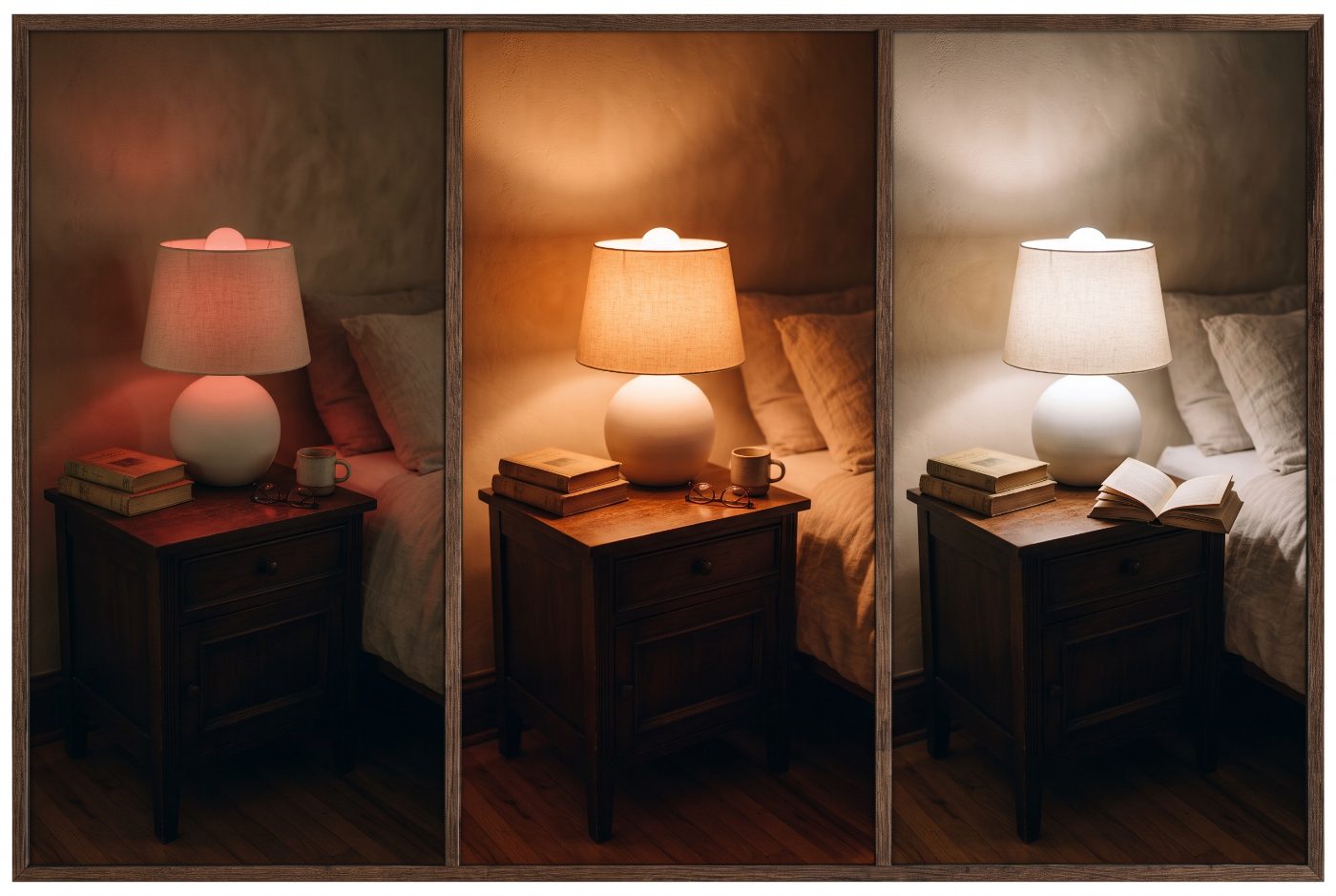
A regular alarm has one setting: silence, then noise. A sunrise alarm clock works differently. For 20 or 30 minutes before your alarm time, it slowly brightens from a dim red glow to a warm, bright white, the way a room fills with light on a summer morning. By the time the sound starts, if you’ve chosen to use sound at all, the room is already bright.
For a lot of people, that makes the first minute of the morning a lot less abrupt. It’s also a nice upgrade to a morning routine you’re trying to make stick, especially through the dark months when the real sunrise comes after your alarm.
Gradual versus all at once
The difference is easy to picture. A standard alarm goes from nothing to full volume in an instant. A sunrise clock spreads the change over half an hour, so there’s no single moment where the room goes from dark to jarring.
The ramp is the whole product. A longer, brighter sunrise is what separates a good clock from a lamp on a timer.
That ramp is the feature you’re paying for, and it’s where the models below differ most. Some let you stretch the sunrise out to 90 minutes, some cap it lower, and the cheapest ones get less bright at the top. Brightness matters more than the sound options, because a dim sunrise in a room with any daylight barely registers.
Amazon pricing moves constantly, so check the current figure on each listing. We’ve ranked these on how well they do the sunrise, not on extras.
The sunrise clocks worth considering
Philips SmartSleep Wake-up Light (HF3520)
Our pick for most peoplePhilips has made wake-up lights longer than almost anyone, and the HF3520 is the model most people should look at first. It simulates both a sunrise in the morning and a sunset at night, shifting through red and orange tones rather than just getting brighter. It has five natural wake-up sounds plus an FM radio, a tap-to-snooze top and a display that dims itself automatically.
- Right for
- Most people. It does the sunrise well, it’s simple to set up without an app, and it works as a bedside reading lamp with 20 brightness settings.
- Skip it if
- You want to control everything from your phone. This one is set up with buttons on the clock itself.
- The drawback
- The design is rounded and a little dated next to newer, sleeker clocks. It looks like an appliance, not a decor piece.
Lumie Bodyclock Shine 300
Most adjustable sunriseLumie is the other long-standing name in sunrise lights, and the Shine 300 is its most flexible model. You can set the sunrise and the sunset anywhere from 15 to 90 minutes, and choose from 15 sounds or the FM radio.
- Right for
- Anyone who wants a very long, very gradual sunrise, and people who like to fine-tune settings.
- Skip it if
- You want the simplest clock you can set once and forget. The extra options take a little longer to learn.
- The drawback
- It sits at the higher end of the range. You’re paying for the adjustability, and if you’d never use a 90-minute sunrise, you won’t notice the difference.
JALL Full-Screen Wake Up Light
Budget way to try itJALL’s clock takes a different approach: the whole front panel lights up instead of a round lamp. That spreads the light across a wider area. The sunrise can be set from 10 to 60 minutes, and it has a built-in white noise feature and several sound options.
- Right for
- Trying a sunrise alarm without committing to a premium model. It covers the core feature for a lot less.
- Skip it if
- Build quality matters to you. The materials and buttons feel budget compared to the Philips or Lumie.
- The drawback
- The menus are fiddly, and the instructions don’t help much. Expect to spend 15 minutes setting it up.
The one to skip
App-controlled smart bulbs as a sunrise alarm
Skip itIn theory, a smart bulb in your bedside lamp can fade up in the morning just like a sunrise clock. In practice, the fade depends on the app, your Wi-Fi and a routine that can break with the next update. Many bulbs also jump from off to a noticeable brightness in one step, which defeats the purpose.
- Right for
- Scheduling lights for when you’re away from home.
- Skip it if
- You’re counting on it to wake you up gently every day. A dedicated clock doesn’t depend on your router.
- The drawback
- When it fails, it fails silently, and you find out when you oversleep. Keep a backup alarm set.
What most people get wrong
They put the clock in the wrong spot. A sunrise alarm needs to be near your face and aimed toward you, usually on the nightstand, not across the room on a dresser. At a distance, even a bright lamp just becomes one more dim light in the room.

The second mistake is leaving the blinds open a crack. Streetlights and early daylight compete with the lamp and wash out the effect. A sunrise clock works best in a room that’s actually dark until it turns on.
Here’s what I’d pick
Get the Philips SmartSleep Wake-up Light (HF3520). It does the one thing that matters, a smooth and bright sunrise, better than cheaper clocks, and it’s simple enough that you’ll actually keep using it.
If you love adjusting settings, the Lumie Shine 300 gives you the longest sunrise. If you just want to see whether waking up to light suits you, the JALL is an inexpensive way to find out.