

⚖️Disclosure: Smart Living HQ is a participant in the Amazon Services LLC Associates Program, an affiliate advertising program. If you buy something through a link on this page we may earn a small commission, at no extra cost to you. It never changes which fix we recommend — our top pick is a curtain rod, because the biggest leaks aren’t about the fabric.
Shop for dark curtains and you’ll see two labels used almost interchangeably: “room darkening” and “blackout.” They aren’t the same thing. Room-darkening fabric cuts most of the light. Blackout fabric is built to stop essentially all of it, usually with a tightly woven or lined layer that light can’t pass through.
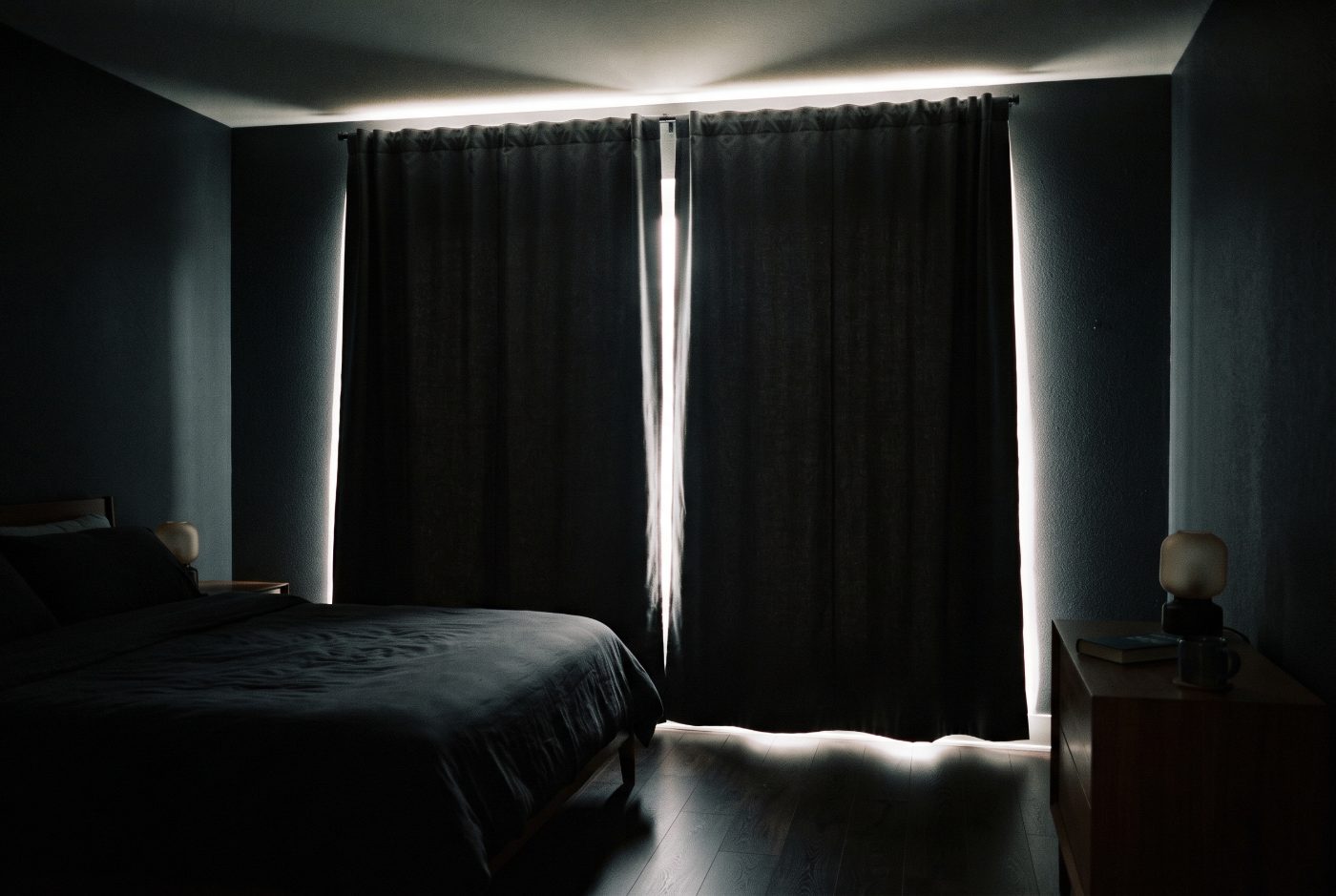
But here’s the part the labels don’t mention: even true blackout fabric won’t make a room dark on its own. Most of the light in a “dark” bedroom isn’t coming through the curtains at all. It’s coming around them.
Where the light actually gets in
Stand in your bedroom on a bright morning with the curtains closed and look at the edges. You’ll usually see four leaks:
- The top, where light spills over the curtain rod and bounces off the ceiling.
- The sides, where the curtain sits a few inches away from the wall and daylight slips around the edge.
- The middle, where two panels meet and don’t overlap.
- The bottom, where a curtain that stops at the sill leaves a bright strip.
Every one of these leaks is a fit problem, not a fabric problem. That’s why the rod matters as much as the curtains.
Fixing the fabric only stops the light coming through the curtain. Fixing the rod and the fit stops the light coming around it, and that’s usually the bigger leak.
Amazon pricing moves constantly, so check the current figure on each listing. The fixes below are ranked by how much light they stop, not by what they cost.
The fixes worth buying
NICETOWN 100% Blackout Curtains (with liner)
Best blackout curtainsThese are the curtains to buy if you’re replacing what you have. The sewn-in black liner is what separates them from standard room-darkening panels. They’re sold as a pair of 52-inch-wide panels in several lengths and colors, so you can hang enough width to overlap your window properly.
- Right for
- Bedrooms facing east or a streetlight, and anyone who wants one purchase that stops the light coming through the fabric.
- Skip it if
- You love the curtains you already have. A liner, below, gets you most of the way there without replacing them.
- The drawback
- Blackout lining makes curtains heavier and stiffer, so they don’t drape as softly as lightweight fabric. Make sure your rod and brackets can hold the weight.
Umbra Twilight Wrap Around Curtain Rod
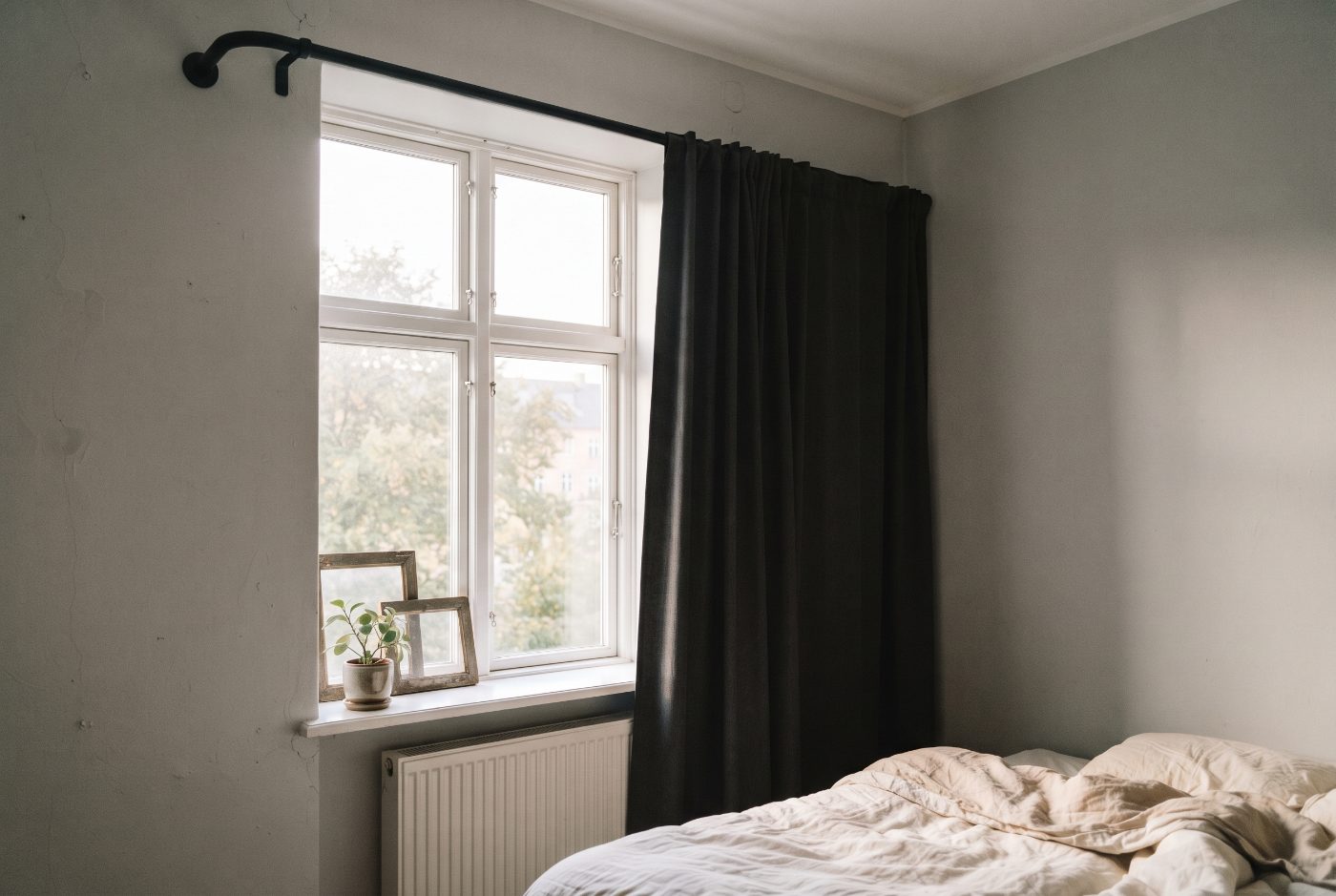
Our pick · the fix most people missThis is the fix most people have never heard of, and it often matters more than the curtains. A wraparound rod curves back to the wall at each end, so the curtain hugs the wall instead of leaving a gap at the sides. It adjusts from 30 to 84 inches.
- Right for
- Anyone who sees a glowing outline around their curtains in the morning. It closes the side gaps that no fabric can fix.
- Skip it if
- Your window sits in a deep recess where the curtain already meets the wall on both sides.
- The drawback
- Curtains don’t glide around the curved ends as easily as they slide along a straight rod, so opening them fully takes a little more tugging.
NICETOWN Blackout Curtain Liners
Keep the curtains you haveIf you like the curtains you have, add a blackout liner behind them. It hangs from the same rod, sits between the curtain and the window, and stops the light the decorative fabric lets through.
- Right for
- Keeping sheer or decorative curtains you love while still getting a dark room.
- Skip it if
- You’re buying new curtains anyway. Blackout curtains with a built-in liner are simpler.
- The drawback
- It’s one more layer to hang, and it has to line up with your curtains to look tidy from inside the room.
Redi Shade No Tools Original Blackout Pleated Paper Shade
Fastest fix for rentersThis is the renter’s fix and the fastest fix. The pleated paper shade sticks to the top of the window frame with adhesive strips, needs no tools or drilling, and can be trimmed to fit. It covers the glass itself, which blocks light before it ever reaches the curtains.
- Right for
- Renters, guest rooms and anyone who needs a dark room this week. Pair it with curtains for the darkest possible result.
- Skip it if
- You want a permanent, polished look. It’s paper, and it looks like it.
- The drawback
- It won’t survive years of daily raising and lowering. Treat it as a quick fix or a hidden layer behind curtains.
The one to skip
Curtains labeled only “room darkening”
Skip itThey’re usually lighter, cheaper and look like blackout curtains in the product photos. But “room darkening” means the fabric filters light rather than blocking it. On a sunny morning, the whole panel can glow.
- Right for
- Living rooms where you want softer light, not a dark room.
- Skip it if
- Your goal is a genuinely dark bedroom. Look for “100% blackout” or a lined construction instead.
- The drawback
- You’ll likely end up buying a liner or a second set of curtains anyway.
What most people get wrong
They buy curtains sized exactly to the window. For a dark room, the curtains should be wider and longer than the window frame: extend the rod several inches beyond the frame on each side, mount it well above the frame, and let the curtains reach the floor or at least well past the sill. Oversizing covers the gaps where light gets in.
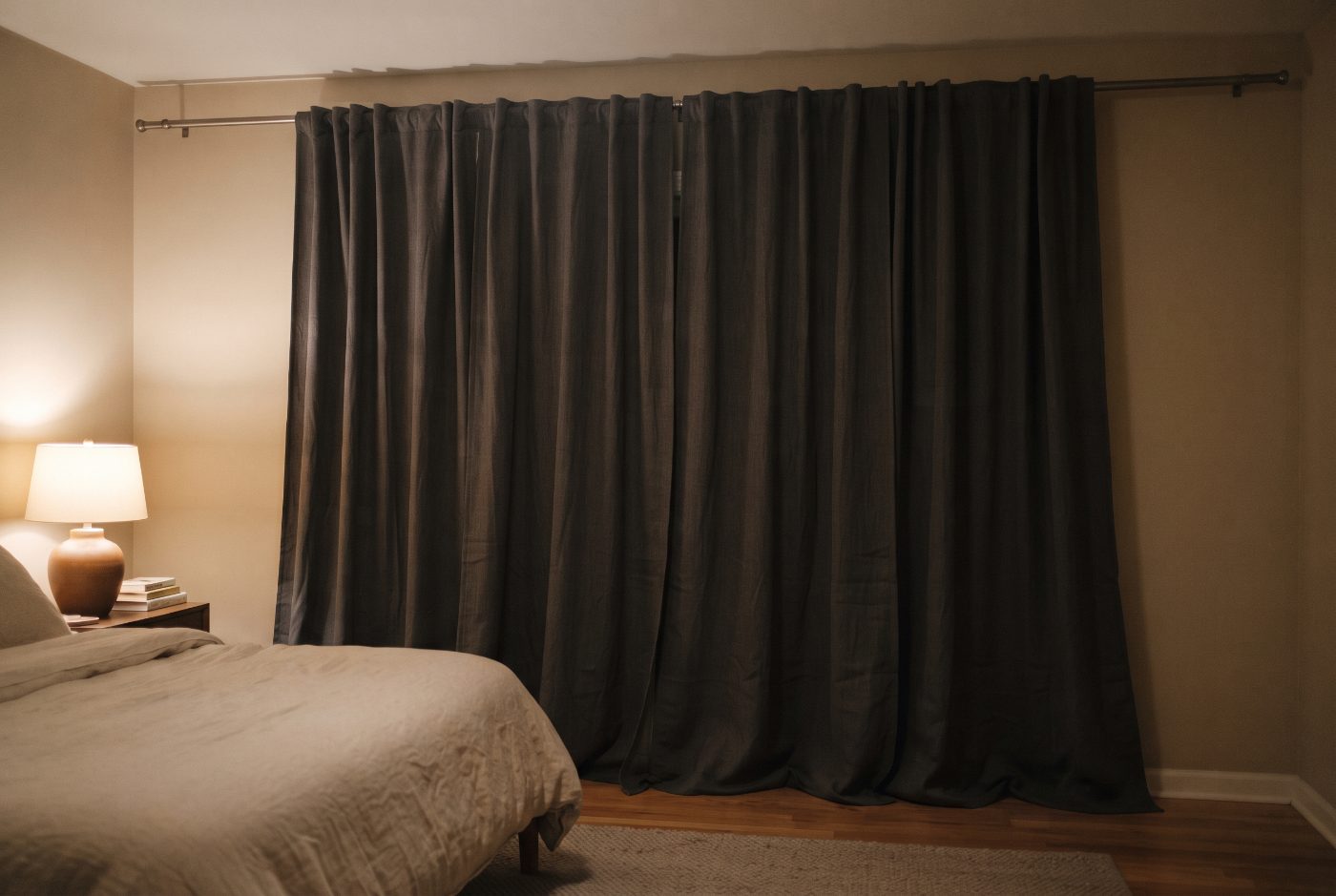
Also make sure the two panels overlap in the middle. A clip or a small magnet sewn into the leading edges keeps them from drifting apart overnight.
Here’s what I’d pick
Start with the Umbra Twilight wraparound rod, then hang blackout curtains on it. The rod closes the side gaps and the lined curtains stop what comes through the fabric. Together they handle the two biggest leaks.
If you’re renting or need results tonight, stick a Redi Shade behind your current curtains. It isn’t pretty, but it covers the glass, and that’s where the light starts.