

⚖️Disclosure: Smart Living HQ is a participant in the Amazon Services LLC Associates Program, an affiliate advertising program. If you buy something through a link on this page we may earn a small commission, at no extra cost to you. It never changes which tools we recommend — the only power tool on this list is the one that does the most work, and we name the popular kit to skip.
Walk into any hardware store with a thrifted dresser in mind and you’ll leave with a bag full of things you don’t need. Refinishing furniture looks like a tool-heavy hobby. It isn’t. A first flip really comes down to three jobs: getting the old finish off, getting the wood smooth, and putting a new finish on that holds up.
Every tool below earns its spot by making one of those three jobs faster or more forgiving. If it doesn’t, it isn’t here.
Where the hours actually go
Most beginners budget their effort backwards. They agonize over stain colors and spend ten minutes on prep. On a typical dresser, sanding eats more of the clock than every other stage combined, and it is the stage that decides whether the finish looks professional or blotchy.
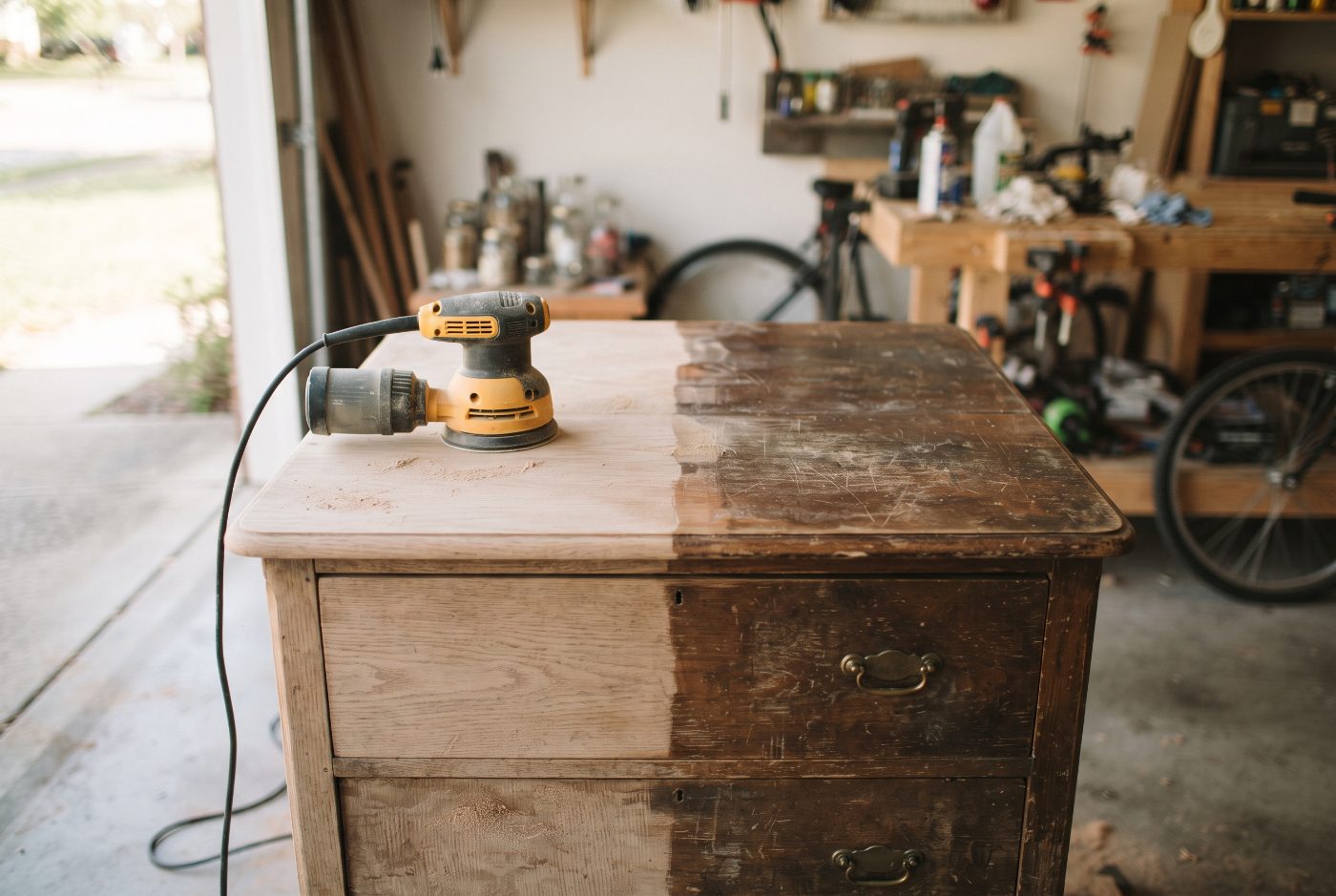
Sanding is where the clock goes and where the finish is won or lost. That’s why the only power tool worth buying first is a sander.
That is why the one power tool on this list is a sander, and why it’s the tool worth spending real money on. Everything else is a consumable you’ll replace project to project.
Amazon pricing moves constantly, so check the current figure on each listing. We’ve ranked these by how much they change the result, not by what they cost.
The six tools worth buying first
DEWALT 5-Inch Random Orbit Sander (DWE6423)
Our pick · the one power tool worth buyingThis is the tool that turns a weekend project into an afternoon one. A random orbit sander spins and oscillates at the same time, so it doesn’t leave the swirl marks that a cheap palm sander carves into flat surfaces. The DWE6423 is corded, has variable speed, and uses standard 5-inch hook-and-loop discs you can find anywhere.
- Right for
- Anyone planning more than one piece. Dresser tops, tabletops, drawer fronts and any big flat surface go from rough to ready in minutes instead of an hour of hand sanding.
- Skip it if
- Your first project is a single chair or a spindly side table. Almost every surface there is curved, and the sponges below will do more of the work.
- The drawback
- It’s corded, so you’ll be managing an extension cord across the garage floor. The dust bag catches most of the dust, not all of it, so sand outdoors or near an open door.
Citristrip Paint and Varnish Stripping Gel
Best for painted piecesSanding through three coats of old paint or a thick varnish burns through discs and time. A stripper lifts most of it first. Citristrip is a gel, so it clings to vertical surfaces like dresser sides instead of running off, and it stays workable for hours rather than minutes.
- Right for
- Painted thrift-store finds and anything with a thick, glossy old finish. Brush it on, cover it with plastic wrap, wait, and scrape.
- Skip it if
- The piece has only a thin, worn finish. A sander alone will handle it faster than waiting on a stripper.
- The drawback
- It’s slow by design. Plan on letting it sit for several hours, and it still needs a scraper and some elbow grease on carved details. Follow the label on ventilation and gloves.
3M Pro Grade Precision Sanding Sponges
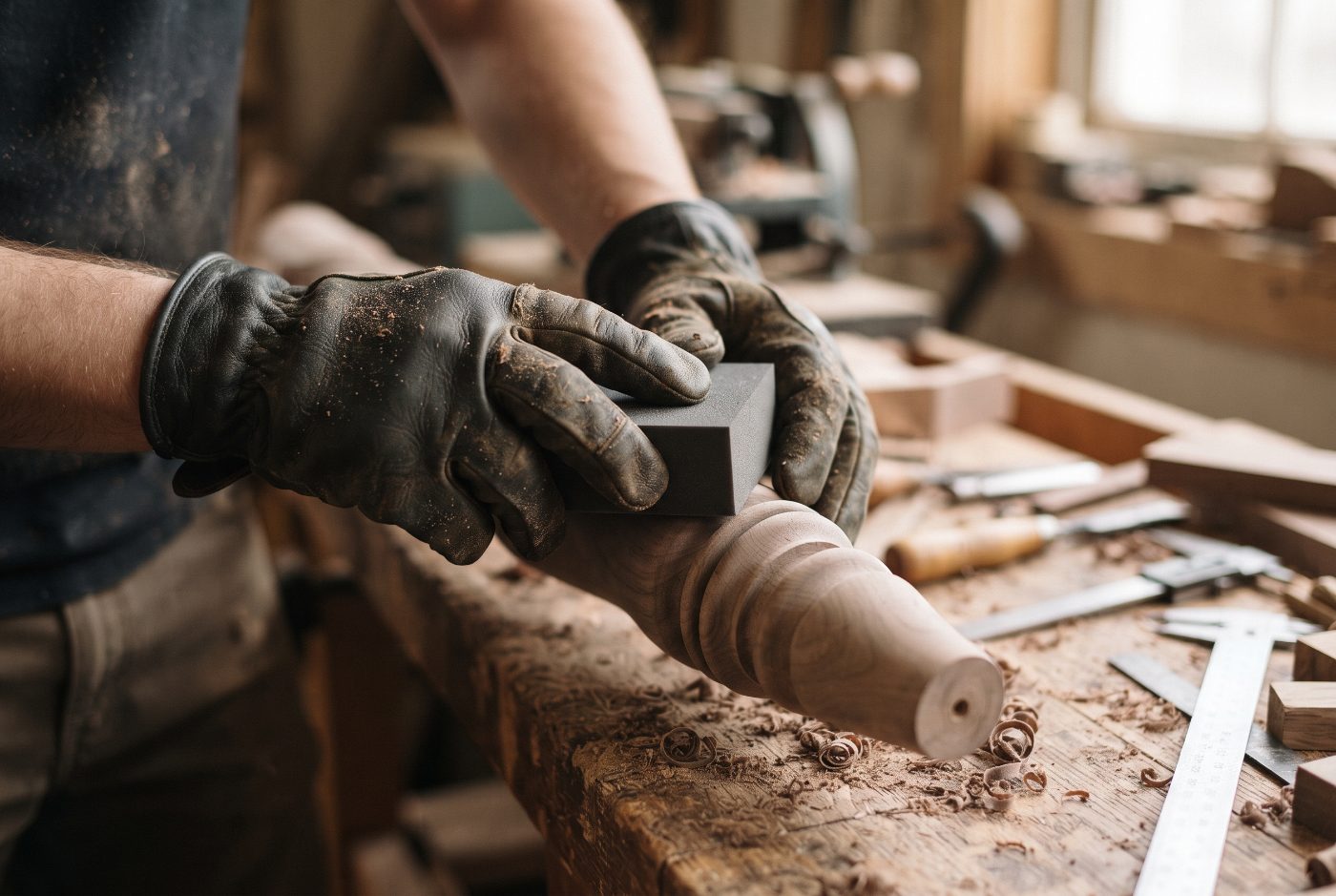
Best for curves and detailsA random orbit sander can’t get into a routed edge, a turned leg or the inside corner of a drawer. These sponges can. They have flat faces, a firm edge and a pointed tip, and they rinse clean so each one lasts through several projects.
- Right for
- Legs, spindles, trim, curved aprons, and the final hand pass before stain. Buy a medium and a fine grit.
- Skip it if
- You’re only refinishing a flat tabletop. The sander covers it.
- The drawback
- They’re slow on big areas and wear out faster than you’d expect on rough wood. Treat them as a detail tool, not a sander replacement.
Minwax Pre-Stain Wood Conditioner
The step beginners skipThis is the step beginners skip and regret. Softwoods like pine and some hardwoods like maple absorb stain unevenly, which leaves dark blotches next to pale patches. A coat of conditioner before staining evens out how the wood takes color.
- Right for
- Pine, birch, maple, alder and cherry, the woods most thrifted furniture is made from.
- Skip it if
- You’re painting the piece, or using a clear finish with no stain at all.
- The drawback
- It adds a step and some waiting between coats, and it can make the final color slightly lighter. Test on the back of a drawer first.
Minwax Wipe-On Poly
The most forgiving finishBrushing a polyurethane topcoat is where many first flips go wrong: drips, brush marks and bubbles. Wipe-on poly goes on with a lint-free rag in thin coats that level themselves. It takes more coats to build up protection, but each one is almost impossible to mess up.
- Right for
- First-timers who want a durable, low-sheen finish without learning brush technique. Satin is the most forgiving look.
- Skip it if
- You’re finishing a kitchen table or anything that sees heavy daily wear. A brushed-on poly builds a thicker coat faster.
- The drawback
- You’ll need three or more coats, with a light sanding between some of them. It’s a patience tool.
Purdy XL Dale Angled Sash Brush
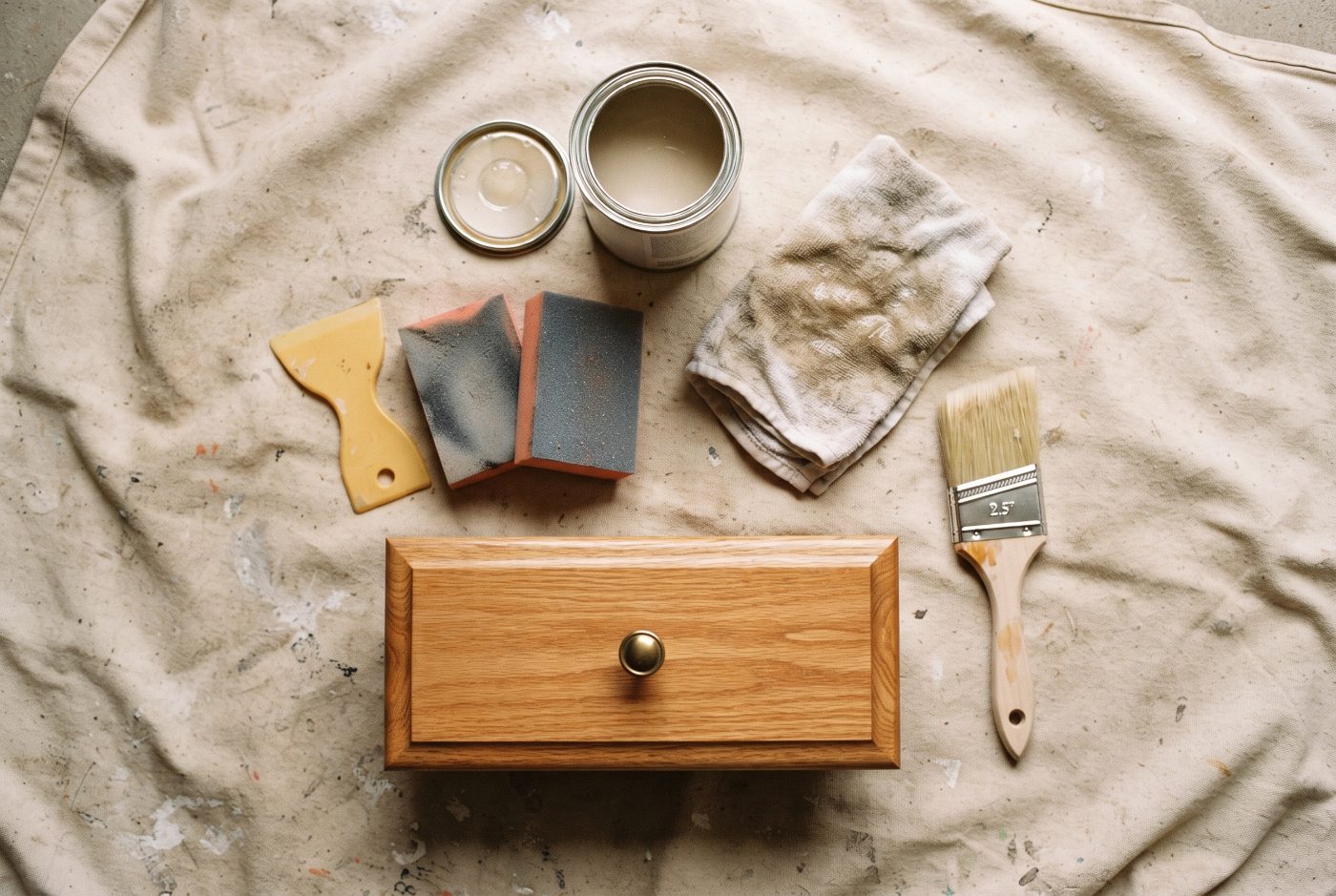
For painted finishesIf you’re painting rather than staining, the brush matters more than the paint brand. A cheap brush sheds bristles into the finish and leaves streaky lines. An angled sash brush like the Purdy XL Dale cuts clean lines along edges and holds enough paint to cover a drawer front in one pass.
- Right for
- Painted furniture, chalk-style finishes and cutting in along edges and hardware.
- Skip it if
- You’re staining and wiping on your finish. You won’t need a good brush at all.
- The drawback
- A quality brush only stays quality if you clean it properly after every use. Leave paint in the bristles once and it’s done.
The one to skip
The 200-piece rotary tool kit
Skip itIt looks like the smart buy: one tool, hundreds of attachments, and a case that promises you’ll be ready for anything. For furniture refinishing it’s the wrong tool. The tiny sanding drums gouge wood when they catch, the cheap bits wear out in minutes, and you’ll spend more time swapping attachments than sanding.
- Right for
- Hobby carving, engraving and cutting small parts, which are different projects entirely.
- Skip it if
- Your goal is a smooth, even surface on a piece of furniture. That’s almost everyone reading this.
- The drawback
- It feels productive while it’s doing damage. Put the money toward the sander instead.
What most people get wrong
They rush the sanding and hope the stain will hide it. Stain doesn’t hide scratches, it highlights them. Every swirl and cross-grain scratch soaks up extra pigment and shows up darker than the wood around it.
The fix is boring: finish with the grain, step through the grits instead of jumping from coarse to fine, and wipe the dust off before any finish touches the wood. The tools above make that easier, but they can’t skip it for you.
Here’s what I’d pick
If you buy one thing, make it the DEWALT DWE6423 random orbit sander. It’s the only tool on this list that cuts hours off the job and makes the finish look better at the same time.
Add the sanding sponges for the curves and a can of wipe-on poly for a finish you can’t get wrong, and you have everything a first flip needs. The stripper and conditioner can wait until the piece in front of you calls for them.