

⚖️Disclosure: Smart Living HQ is a participant in the Amazon Services LLC Associates Program, an affiliate advertising program. If you buy something through a link on this page we may earn a small commission, at no extra cost to you. It never changes which container we recommend — the cheapest option on this list is a plain glass jar.
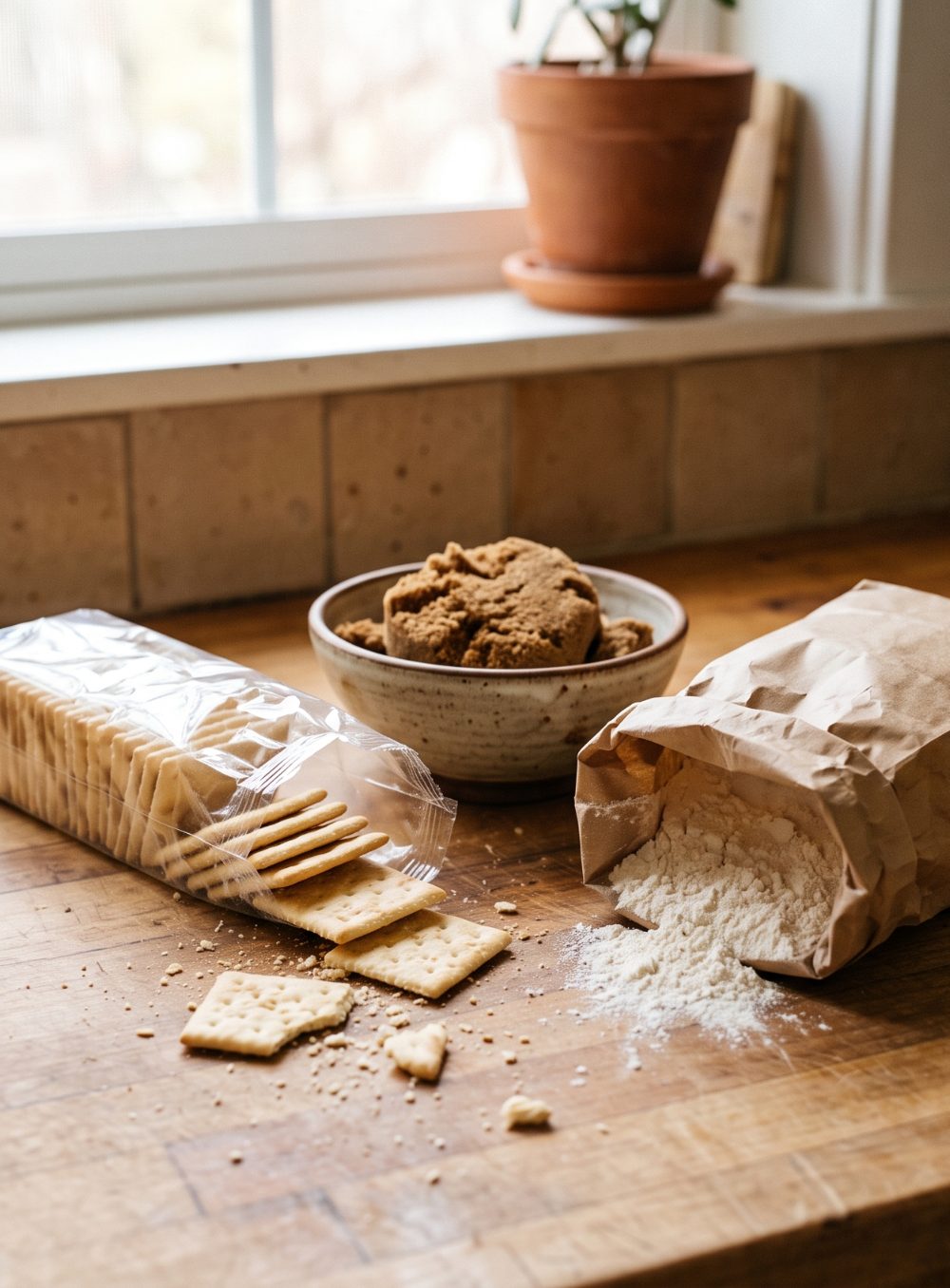
Most pantry waste doesn’t feel like waste. It’s the crackers that went soft because the bag didn’t reseal, the brown sugar that turned into a brick, the half bag of flour you threw out because you couldn’t remember how old it was, and the cereal you bought again because you couldn’t see there was still some left.
None of it is dramatic. But a few dollars a month in stale, forgotten or duplicate groceries adds up quietly, and the right containers stop almost all of it.
A small leak adds up
Pick a number that sounds honest for your household: how much do you throw out or buy twice from the pantry in a typical month? For many families, it’s somewhere between a few dollars and ten.
Over a year, $3 a month is $36. At $6 a month it’s $72, and at $10 a month it’s $120. That’s money spent on food nobody ate. Airtight containers attack both causes at once: food stays fresh longer, and clear sides show you what you already have before you buy more.
Stale crackers, a hardened bag of brown sugar, a second box of cereal you didn’t need. None of it feels like much in a month, but it adds up over a year.
That’s also the test for any container on this list. It has to seal properly, and you have to be able to see inside. A container that fails either test is just decoration.
Amazon pricing moves constantly, so check the current figure on each listing. We’ve ranked these on how well they seal and how easy they are to live with.
The containers worth buying
OXO Good Grips POP Containers (10-Piece Set)
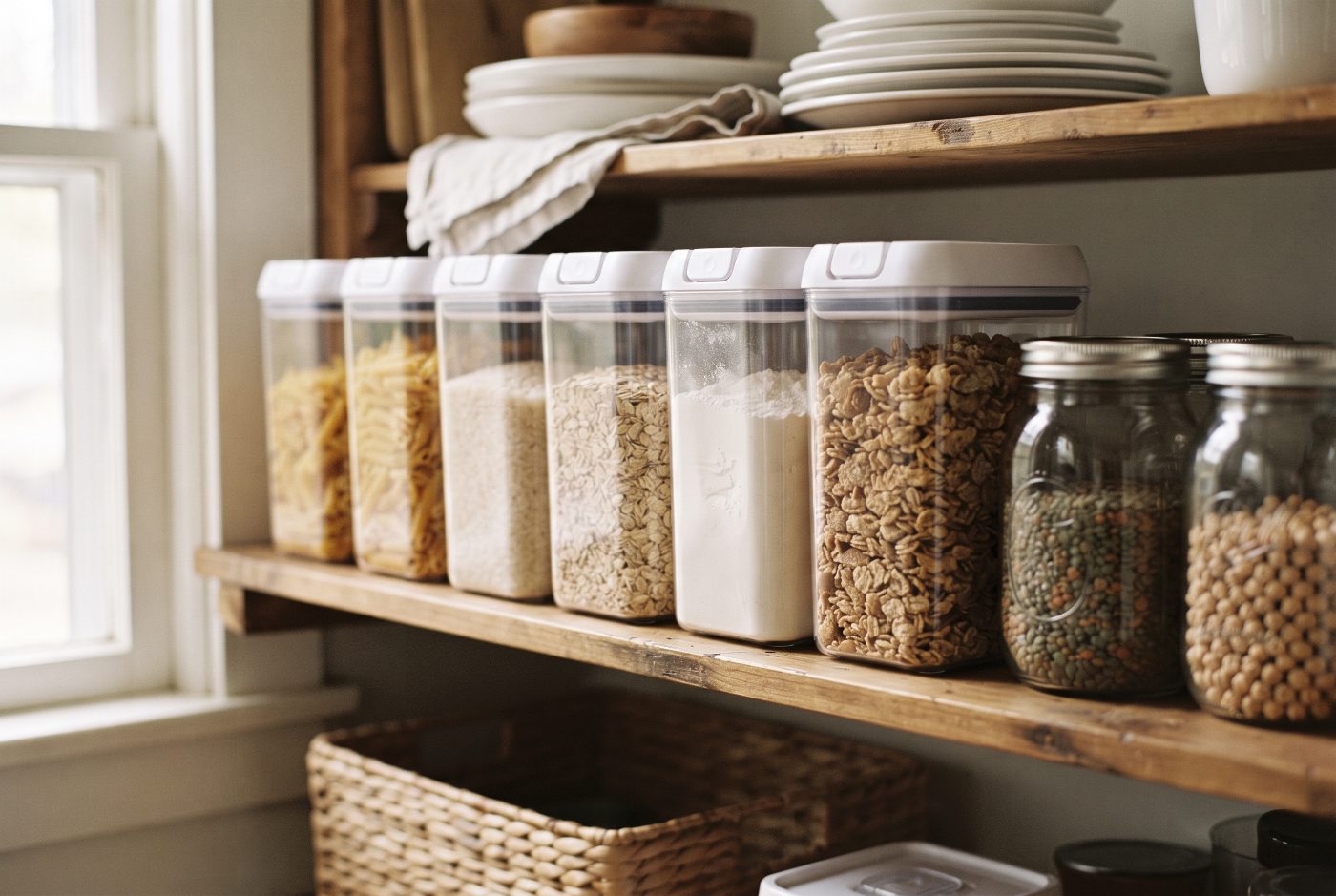
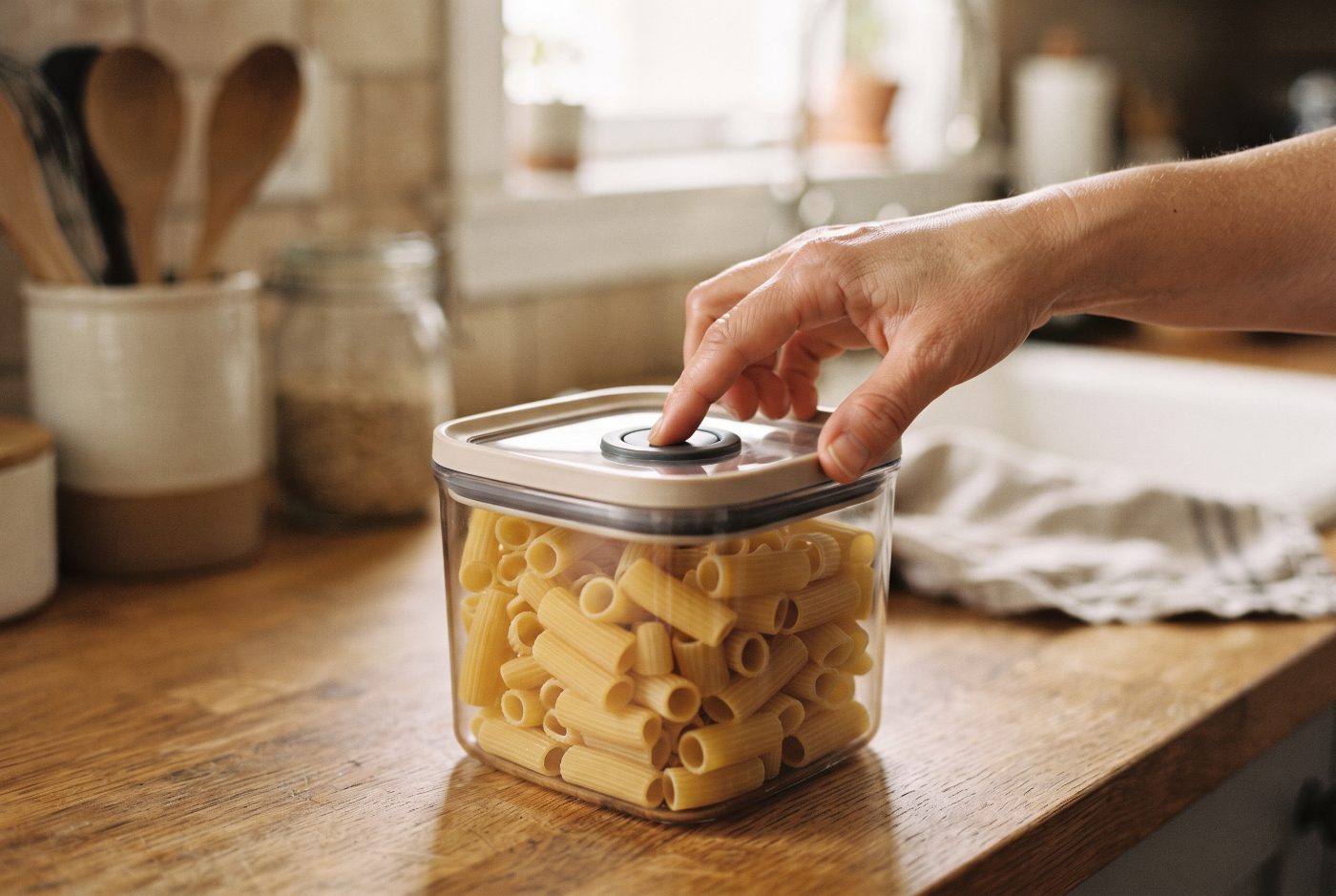
Our pick · easiest to live withThe POP containers are the ones you’ve probably seen in organized pantries online, and they’re popular for good reason. Press the button on the lid and it locks down with an airtight seal; press it again and the button pops up to act as a handle. The containers are square, so they stack and line up without wasting shelf space.
- Right for
- Anyone setting up a pantry from scratch. The set covers flour and sugar, pasta, cereal and snacks, and one-handed opening makes them easy to use every day.
- Skip it if
- You’re on a tight budget. They’re among the more expensive options, and you can get a similar seal for less.
- The drawback
- The lid mechanism has more parts than a simple lid, and the lids need to be hand-washed to keep the seal working well.
Rubbermaid Brilliance Pantry (10-Piece Set)
Best latching lidsRubbermaid’s Brilliance line uses a very clear plastic that looks almost like glass, with latching lids that seal airtight. The set is a strong alternative to the OXO if you prefer latches to a push button.
- Right for
- Pantries where you want to see contents clearly from across the shelf, and anyone who likes latching lids.
- Skip it if
- You need a lot of tall containers for bulk flour or cereal. Check the set’s sizes against what you actually buy.
- The drawback
- The latches take two hands to open and close, which is a small thing you’ll notice every day.
Chef’s Path Airtight Food Storage Containers (7-Piece Set)
Best budget setChef’s Path sets are the budget route to an airtight pantry. The flip-lock lids clamp down on all four sides, and the 7-piece set spans a large 13.5-cup container down to two small 4.2-cup ones, so it covers the basics in one purchase.
- Right for
- Families setting up a whole pantry on a budget.
- Skip it if
- You want the sturdiest containers available. The plastic feels thinner than OXO or Rubbermaid.
- The drawback
- The flip-lock hinges can loosen over time with heavy use. Check the seal now and then.
Ball Wide Mouth Quart Mason Jars
Cheapest airtight optionThe cheapest airtight container in most kitchens is a glass mason jar. Wide-mouth quart jars are easy to scoop from, they seal with the lid and band, and glass never holds onto smells.
- Right for
- Dried beans, rice, oats, nuts, coffee and smaller quantities of anything. Glass is also nice for anyone avoiding plastic.
- Skip it if
- You need to store big bags of flour or cereal. A quart jar is too small for bulk quantities.
- The drawback
- Round jars waste shelf space compared with square containers, and glass is heavy and breakable on a high shelf.
The one to skip
Decorative canisters with loose-fitting lids
Skip itBamboo-lid glass canisters and farmhouse-style tins look beautiful in photos. But many of them have lids that sit on top rather than seal, and a canister that isn’t airtight lets food go stale almost as fast as a rolled-up bag.
- Right for
- Counter decor, or storing things that don’t go stale, like wooden spoons or tea bags that are already individually wrapped.
- Skip it if
- You want the container to keep food fresh. Look for a silicone gasket or a locking lid.
- The drawback
- You’ll pay extra for the look and still waste the food.
What most people get wrong
They buy containers before measuring. Measure the shelf height and depth first, and check how much flour, sugar and cereal you actually buy at a time. A beautiful set that doesn’t fit your shelves or your bags ends up in a cabinet.
The second mistake is dumping new food on top of old. Use up what’s in the container first or pour the old contents into a bowl, add the new, and put the older food on top so it gets used first.
Here’s what I’d pick
Get the OXO Good Grips POP set. The one-button seal means you’ll actually close them every time, and the square shape makes a pantry easier to see at a glance, which is where the savings come from.
On a budget, the Chef’s Path set gets you airtight storage for less, and a few Ball wide-mouth jars are the cheapest way to start with the staples that go stale fastest.